



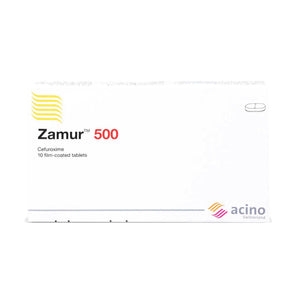

Zamur 500 mg Tablet 10 Pcs:
Cefuroxime is an antibiotic used for adults and children.
It works by killing the bacteria that cause infections.
It belongs to a group of medicines called cephalosporins.
Cefuroxime is used to treat infections of the throat, sinuses, middle ear, lungs or chest, urinary tract, skin, and soft tissues.
Cefuroxime can also be used to treat Lyme disease (an infection spread by parasites called ticks).
Your doctor may test the type of bacteria causing your infection and monitor whether the bacteria are sensitive to cefuroxime during treatment.
What you should know before taking cefuroxime:
Do not use cefuroxime if:
You are allergic to cefuroxime or any of its other ingredients.
You are allergic to any other cephalosporin antibiotic.
You have previously had a severe allergic reaction to any penicillin.
Warnings and precautions:
Do not crush the tablets.
Cefuroxime can affect the results of blood sugar level tests or a blood test called the Coombs test.
Tell your doctor if you have a history of colitis, kidney failure, or seizure disorders.
Other medicines and cefuroxime:
Cefuroxime may interact with:
Antacids
Probenecid
Oral blood thinners
Birth control pills
How to take cefuroxime:
Take cefuroxime after food. This will help make the treatment more effective.
Swallow the cefuroxime tablets whole with some water.
Do not chew, crush, or split the tablets – this may make the treatment less effective.
Recommended dose:
Adults:
The recommended dose of cefuroxime is 250 mg to 500 mg twice daily depending on the severity and type of infection.
Children:
The recommended dose of cefuroxime is 10 mg/kg (up to 125 mg) to 15 mg/kg (up to 250 mg) twice daily depending on the severity and type of infection.
Cefuroxime is not recommended for children under 3 months old, as safety and effectiveness are not known in this age group.
Depending on the illness or how you or your child respond to treatment, the initial dose may be changed or more than one course of treatment may be needed.
Patients with kidney problems
If you have kidney problems, your doctor may adjust your dose.


