


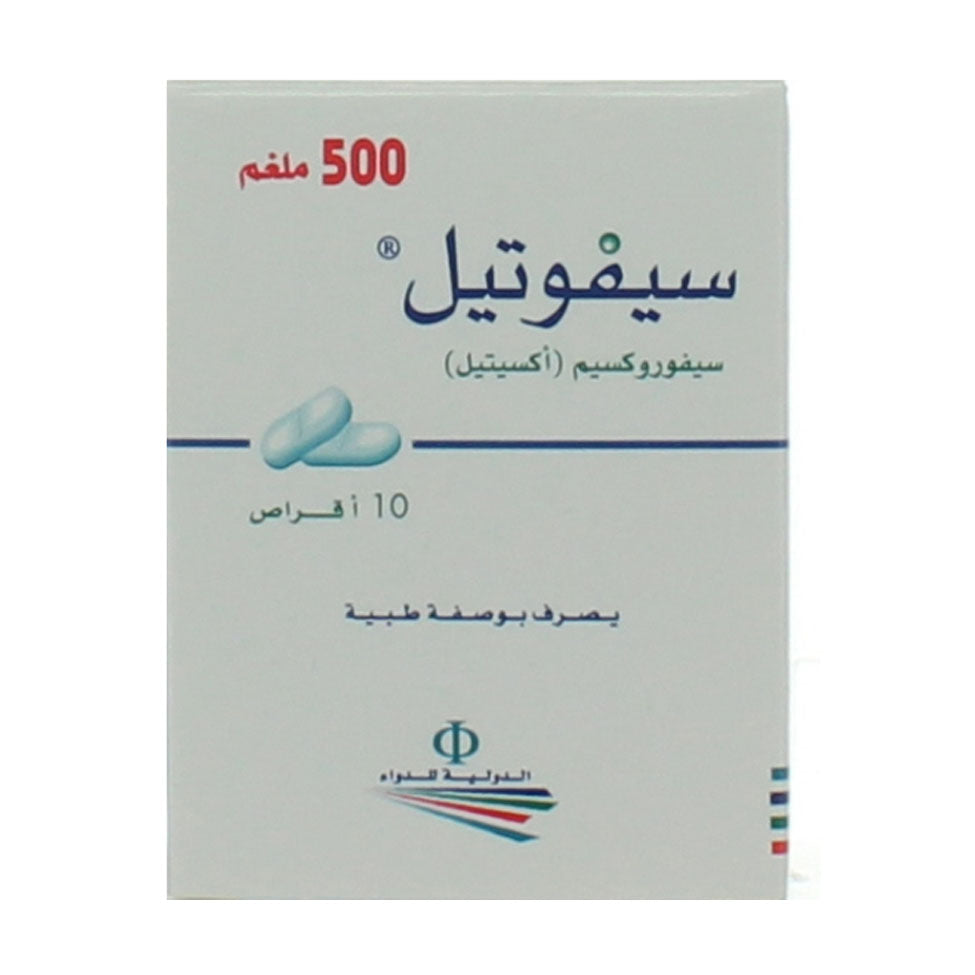

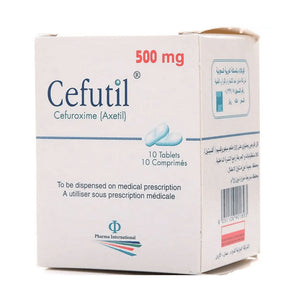
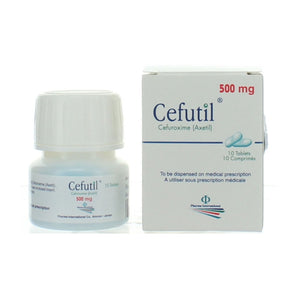
Cefutil 500 mg 10 Tablets
Price includes tax
Cefutil 500 mg 10 Tablets :
Take this medicine only as directed by your doctor.
Do not take more of it, do not take it more often, and do not take it for longer than your doctor has prescribed.
The oral liquid works differently from Ceftin® tablets, even at the same dose (milligram amount).
Do not switch from tablets to the oral liquid unless your doctor tells you to.
The liquid form should be taken by mouth with meals, while the tablet form can be taken with or without food.
Swallow the tablets whole. Do not break, crush, or chew them.
Shake the oral liquid well before each use.
Measure the medicine with a marked measuring spoon, oral syringe, or medicine cup.
An average household teaspoon may not hold the correct amount of liquid.
Continue using this medicine for the full course of treatment, even if you feel better after the first few doses. The infection may not clear up if you stop the medicine too soon.
Usage Instructions:
The dose of this medicine varies among patients.
Follow your doctor's instructions or the directions on the label.
The following information includes only average doses of this medicine.
If your dose is different, do not change it unless your doctor tells you to.
The amount of medicine you take depends on the strength of the medicine.
Also, the number of doses you take each day, the time allowed between doses, and how long you take the medicine depend on the medical problem you are treating.
For infections:
For oral dose (coated tablets):
Adults and teenagers: 250 to 500 milligrams twice a day for 10 days.
Gonorrhea is treated with a dose of 1 gram.
Children (who can swallow tablets): 250 mg twice a day for 10 days.
Children (who cannot swallow tablets): use is not recommended.
For oral dose (suspension):
Children from 3 months to 12 years:
The dose depends on body weight and should be determined by the doctor.
The dose usually ranges from 20 to 30 milligrams (mg) per kilogram (kg) of body weight daily divided into two doses, taken for 10 days.
However, the dose usually does not exceed 1000 mg.
Infants up to 3 months:
Your doctor should determine use and dose.
Warnings and Precautions:
Before taking cefuroxime, tell your doctor or pharmacist if you are:
Allergic to it, or penicillin, or other cephalosporin antibiotics (such as cephalexin); or if you have any other allergies.
This product may contain inactive ingredients which can cause allergic reactions or other problems.
For more information, talk to your pharmacist.
Before using this medicine, tell your doctor or pharmacist your medical history, especially about:
Kidney disease, bowel disease (colitis), liver disease, poor nutrition.
This medicine may make you dizzy or drowsy.
Alcohol or marijuana can make you more dizzy or drowsy.
Do not drive, use machines, or do anything that requires alertness until you can do so safely. Limit alcoholic drinks.
Cefuroxime may cause live bacterial vaccines (such as typhoid vaccine) to not work well.
Tell your healthcare provider you are using cefuroxime before any immunizations/vaccines.
Use caution when giving this medicine to elderly people because they may be more sensitive to its effects.


