


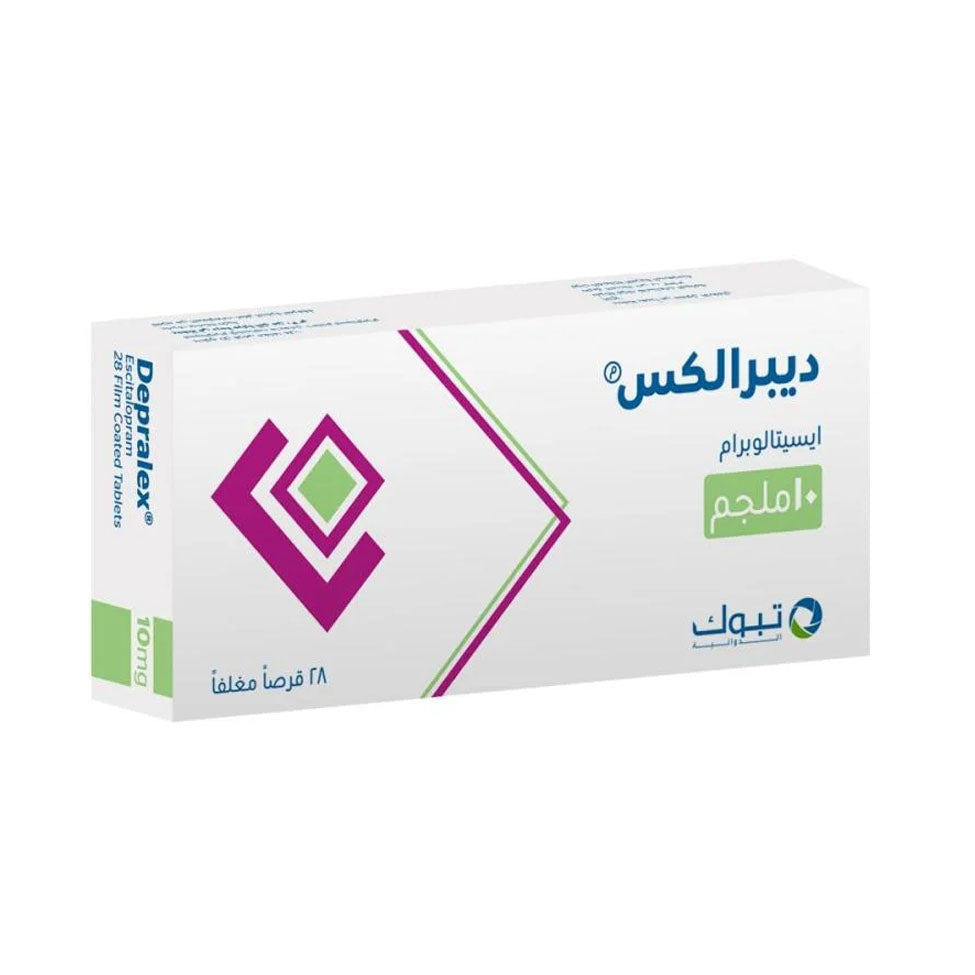


Depralex 10 mg 28 Tab :
Escitalopram 10 mg tablets.
Escitalopram belongs to a group of antidepressants called selective serotonin reuptake inhibitors (SSRIs).
These medicines work on the serotonin system in the brain by increasing the level of serotonin. Disorders in the serotonin system are an important factor in the development of depression and related illnesses.
Escitalopram is used to treat depression (major depressive episodes) and anxiety disorders (such as panic disorder with or without agoraphobia, social anxiety disorder, generalized anxiety disorder, and obsessive-compulsive disorder).
It may take two weeks before you start to feel better.
Continue taking escitalopram, even if it takes some time before you notice any improvement in your condition.
You should talk to your doctor if you do not feel better or if you feel worse.
What you need to know before using escitalopram:
Do not use escitalopram:
If you are allergic to escitalopram or any of the other ingredients in this medicine
If you have had or suffer from an abnormal heart rhythm (shown in an electrocardiogram; a test to assess how the heart works).
Warnings and precautions:
You should tell your doctor the following:
If you have epilepsy. Treatment with escitalopram should be stopped if seizures occur at the same time or if there is an increase in seizure frequency.
If you have liver or kidney problems. Your doctor may need to adjust your dose.
If you have diabetes. Treatment with escitalopram may change blood sugar control. Insulin and/or oral blood sugar medication doses may need adjustment.
If you have low sodium levels in your blood.
If you tend to bleed or bruise easily.
If you are receiving electroconvulsive therapy.
If you have coronary heart disease.
If you have or have had heart problems or recently suffered a heart attack.
If you have a low resting heart rate and/or you know you may suffer from salt loss due to severe diarrhea and vomiting for long periods (illness) or use of water tablets (diuretics).
If you have a fast or irregular heartbeat, fainting, collapse, or dizziness when standing, which may indicate abnormal heart rhythm.
If you have or have had eye problems, such as certain types of glaucoma (increased pressure in the eye).


