



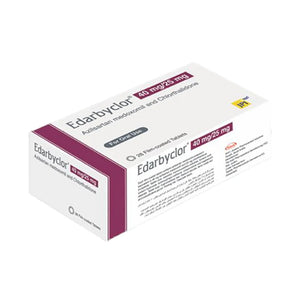
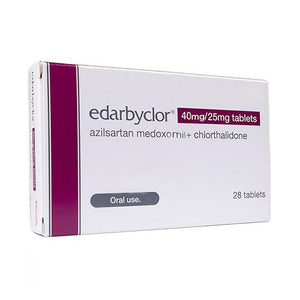
Edarbyclor 25/40 mg 28 tablets:
Edarbyclor is a medication used to treat high blood pressure. It contains two active ingredients: Azilsartan Medoxomil, an angiotensin II receptor blocker that helps relax blood vessels, and Chlorthalidone, a diuretic that helps eliminate excess fluids and salts. The medication lowers blood pressure and reduces the risk of complications from high blood pressure such as stroke, heart, and kidney diseases.
Uses:
- Treatment of high blood pressure in adults.
- Used when a single drug is not sufficient to control blood pressure.
- May be used as initial therapy in patients who need more than one medication to control blood pressure.
Usage instructions:
- Take as prescribed by your doctor, once daily.
- Can be taken with or without food.
- It is preferable to take it at the same time daily.
- If a dose is missed, take it as soon as remembered on the same day; if it is near the time for the next dose, skip the missed dose and do not double the dose.
- Do not stop treatment without consulting your doctor even if blood pressure readings become normal.
Drug interactions:
Edarbyclor may interact with some medications, including:
- Other blood pressure-lowering medications, which may increase the risk of low blood pressure.
- Other diuretics.
- Nonsteroidal anti-inflammatory drugs (NSAIDs) such as ibuprofen and diclofenac, which may reduce the drug’s effectiveness and affect kidney function.
- Potassium supplements or potassium-containing salt substitutes, and drugs that raise potassium levels in the blood.
- Lithium, as the drug may increase its blood levels.
- Digoxin and some heart medications that may be affected by changes in electrolyte levels.
Contraindications:
- Allergy to Azilsartan Medoxomil, Chlorthalidone, or any of the drug components.
- Pregnancy, especially during the second and third trimesters.
- Anuria (absence of urine).
- Severe liver failure.
- Concurrent use with Aliskiren in diabetic patients.
Warnings and precautions:
- May cause a drop in blood pressure, especially in dehydrated patients or those taking diuretics.
- Kidney function and blood electrolyte levels should be monitored during treatment.
- May cause low sodium or potassium levels or increased uric acid, especially with long-term use.
- Ensure adequate fluid intake, especially in cases of vomiting, diarrhea, or excessive sweating.
- Use with caution in patients with kidney or liver disease and the elderly.
- May cause dizziness, so caution is advised when driving or operating machinery.
Side effects:
Common side effects include:
- Dizziness or feeling lightheaded.
- Low blood pressure.
- Increased urination.
- Fatigue.
- Changes in electrolyte levels or kidney function.
Rare but potentially serious side effects include:
- Severe drop in blood pressure or fainting.
- Deterioration of kidney function or kidney failure.
- Severe disturbances in electrolyte levels such as low potassium or sodium.


